Saturday, July 23, 2011
Picture Archiving Systems in Dentistry: From the Imaging Informatics Week 2010
Wednesday, June 22, 2011
FDA goes global with sharing data, regulatory resources
As part of a new strategy to keep up with imported regulated products, the FDA said it will work with international regulatory bodies to foster safe product development globally. The agency said the strategy, titled “Pathway to Global Product Safety and Quality,” includes developing international data information systems and networks to share regulatory resources across world markets.“Global production of FDA-regulated goods has exploded over the past 10 years. In addition to an increase in imported finished products, manufacturers increasingly use imported materials and ingredients in their U.S. production facilities, making the distinction between domestic and imported products obsolete,” said FDA Commissioner Margaret A. Hamburg, MD. “There has been a perfect storm—more products, more manufacturers, more countries and more access. A dramatic change in strategy must be implemented.”
In a June 20 release, the FDA noted four key elements to the new strategy:
- The FDA will partner with its worldwide counterparts to create coalitions of regulators focused on ensuring and improving global product safety.
- The coalitions of regulators will develop international data information systems and networks and increase the regular and proactive sharing of data and regulatory resources globally.
- The FDA will build in additional information gathering and analysis capabilities with an increased focus on risk analytics and IT.
- The FDA increasingly will leverage the efforts of public and private third parties and industry and allocate FDA resources based on risk.
The strategy is a response to trends the agency expects to see worldwide in coming years:
- Western economies will increase their productivity to compete with emerging markets and economies, leading to more imports and increased pressure to reinventmanufacturing processes.
- Money, goods, data and people will increasingly and more quickly cross borders.
- Growing demand, constrained supply and increased regulatory and social scrutiny will determine what resources are used, how they are used and the cost. Manufacturers will adopt new manufacturing processes and emerging technologies in response.
- Governments worldwide will increasingly be called upon to mitigate the sometimes negative impacts of globalization on their citizens, making the operating environment for companies more complex.
Friday, April 29, 2011
When viruses attack ICU
Intensive Care Units (ICU) are places in hospitals where people with special care are placed. Those people need continuous monitoring for there condition. These units are normally equipped with high tech patient monitor machines, ECGs, and ventilators.
Furthermore, ICU's normally keep higher standard of infection control to make them invulnerable to all kinds of infections due to the critical condition of it's patients.
e-Infection !
Last, week I was in Al-Amiri hospital, Kuwait. I was doing maintenance to a portable xray machine. There, I was struck with a view on all PC screens. Those PC's were running Critical Care Information system. In fact, all screens where showing a Mcfee Virus Alert. The list; as you see above, is showing multiple virus infections.
Even though ICU was equipped with high-tech patient monitors, ventilators and looked very clean and dis-infected, but it was; actually, infected with a special infections. These infection have no direct harm to the patient but they eventually do a harm !
How does a computer virus threatens life?
In these days, patient monitoring is not done at each bed. Each patient is monitored centrally by nurses & medical staff; i.e., at the nurse station. Thus, interruption in flow of clinical data between patient monitors and central monitoring system will definitely interrupt monitoring the vital signs of critically ill patient's .
Second; at critical care stations, physicians make electronic requests; i.e., for lab or imaging procedures. Virus infections can make those PC's slow or make them completely down by corrupting some files. In fact, delay in exam requests is definitely a life threatening .
Third, at critical care stations, physicians write there reports, notes or prescribe patient's medication. Virus threats on those stations; again, will delay the whole process at the ICU. Delay is not a good sign of a good ICU.
On the ground..
Frankly speaking, this ICU was not the only place in Ministry of Health where I have seen such virus attacks. Many places like neonatal ICUs, Radiology Departments, Cardiology, and Nuclear Medicine had the same issue.
In 2008, one year after world-wide attacks of a well know electronic warm(special viruses). the warm(or Trojan) with different names such as (DownaDop, Conficker, etc...) have hit most of ministry's information systems in a mater of a week. Moreover, xray and ultrasound machines were also hit by this warm specially those with MS-Windows XP were badly hit. Around 6 Xray machines went totally down due to network problems.
Finally, we have to admit that hospitals in Kuwait are in trouble ! In near Future we
might see a crisis due to the fact that the no. of medical equipment getting connected using
TCP/IP networks is exponentially growing.
Problem and Solution !
The problem is not actually the "virus attacks", virus attacks happen every day and everywhere, the problem is lack of network security , and maintaining that ! In fact, If you are connected to the outside world then you are at risk ! you don't have to be connected to the internet, allowing use of removable storage devices (i.e. USB sticks) is the biggest source of invulnerability.
The solution is not easy but affordable and better to start now than never.Effort to set standards for security in eHealth and for medical devices is going on. HIPAA is one example of such standards. HIPAA is a governmental act in USA to assure security and privacy of patient's health records. Some of these requirements are securing health records from viruses.
Moreover, and effort was taken by U.S department of veteran affairs to design a model for secure network of medical devices. See Excellent readings. Another effort was taken by Society of Hospital Information Mangament Systems (HiMSS) to encourage a medical device security disclosure like DICOM conformance statement. See Excellent Reading below.
In Kuwait, the gap is very huge. We should immediatly start some where. Niether we have IT team in hospital nor Biomedical Engineering departments have experience or a say in this. Thus a very rough plan should be divided into three stages.
Stage 1. Putting IT security standards on our list of priorities.
Stage 2. Forming an independent IT support team in the hospital independent from medical device vendor. If MOH claims that they don't have enough resources, IT team doesn't have to be through local staff, IT can be outsourced just like electrical maintenance or waste Management .
Stage 3. To Include IT support, Network management , and network security in medical device RFP, and the service contract (service level agreement.)
Excellent Readings..
Sunday, April 17, 2011
Class I Recall- Product May Shed Particles of Tungsten
Recall Class: Class I
Date Recall Initiated: Feb. 3, 2011
Product: Axxent® FlexiShield Mini, Model F5300.
[04/13/2011 - Recall Notice - FDA]
Breast Device Recall Made Most Severe
By DENISE GRADY
Published: April 14, 2011
Source: The NewYork Times
The recall of a medical device that left particles of tungsten in women’s breasts has been classified as the most serious type of recall, one involving “situations in which there is a reasonable probability that use of these products will cause serious adverse health consequences or death,” the Food and Drug Administration said on Wednesday.
The device, the Axxent FlexiShield Mini, was a pad made of tungsten and silicone rubber that was temporarily placed inside breast incisions during an unusual procedure in which women were given an entire course of radiation treatment in one dose after undergoing alumpectomy for cancer. The pads were used to help direct the radiation beam and shield healthy tissue. But the pads were flawed, and left the breast tissue and chest muscles riddled with hundreds of tungsten particles.
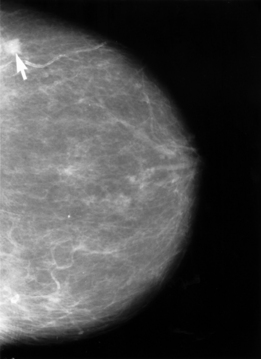
It is not known if tungsten is dangerous because relatively little research has been done on its long-term health effects in humans. But it shows up on mammograms and may make them difficult to read, especially troubling for women who have had breast cancer and worry about recurrences. The metal particles resemble calcium deposits, which can indicate cancer.
That the tungsten shows up on mammograms is what made the recall Class I, the most serious type, said Karen Riley, a spokeswoman for the Food and Drug Administration. She said the particles could interfere with diagnosis because they can be mistaken for cancerous calcifications or may hide real calcifications. Twenty-nine women are known to have been affected: 27 at Hoag Memorial Hospital Presbyterian in Newport Beach, Calif., and 2 at Karmanos-Crittenton Cancer Center in Rochester Hills, Mich. So far, 16 have had follow-up mammograms six months after their surgery, and all 16 were found to have tungsten particles.
Some of the women, concerned that the tungsten could be harmful, are considering having mastectomies to rid themselves of the particles. Seven are suing Hoag and the device manufacturer, according to Jeffrey Milman, a lawyer in Irvine, Calif., who is representing the women.
Mr. Milman said that for the purposes of the lawsuits, the government’s decision to classify the recall as serious was “icing on the cake.” The device was made by a company called Xoft, which was subsequently bought by another company, iCad.
The Axxent FlexiShield Mini had been cleared by the drug agency in June 2009 in an abbreviated process used for devices that are considered equivalent to products already on the market. That process, known as 510(k), takes less time than the procedure used to approve a new device, and it generally does not require tests on humans.
The shields, taken off the market in February, were cut to fit each patient, and Ms. Riley said the tungsten particles were shed after the cutting. But why that occurred is not clear, because the shields were meant to be cut and were made with that in mind.
Recall Class: Class I
Date Recall Initiated: Feb. 3, 2011
Product: Axxent® FlexiShield Mini, Model F5300.
[04/13/2011 - Recall Notice - FDA]
Breast Device Recall Made Most Severe
By DENISE GRADY
Published: April 14, 2011
Source: The NewYork Times
The recall of a medical device that left particles of tungsten in women’s breasts has been classified as the most serious type of recall, one involving “situations in which there is a reasonable probability that use of these products will cause serious adverse health consequences or death,” the Food and Drug Administration said on Wednesday.
The device, the Axxent FlexiShield Mini, was a pad made of tungsten and silicone rubber that was temporarily placed inside breast incisions during an unusual procedure in which women were given an entire course of radiation treatment in one dose after undergoing alumpectomy for cancer. The pads were used to help direct the radiation beam and shield healthy tissue. But the pads were flawed, and left the breast tissue and chest muscles riddled with hundreds of tungsten particles.
It is not known if tungsten is dangerous because relatively little research has been done on its long-term health effects in humans. But it shows up on mammograms and may make them difficult to read, especially troubling for women who have had breast cancer and worry about recurrences. The metal particles resemble calcium deposits, which can indicate cancer.
That the tungsten shows up on mammograms is what made the recall Class I, the most serious type, said Karen Riley, a spokeswoman for the Food and Drug Administration. She said the particles could interfere with diagnosis because they can be mistaken for cancerous calcifications or may hide real calcifications. Twenty-nine women are known to have been affected: 27 at Hoag Memorial Hospital Presbyterian in Newport Beach, Calif., and 2 at Karmanos-Crittenton Cancer Center in Rochester Hills, Mich. So far, 16 have had follow-up mammograms six months after their surgery, and all 16 were found to have tungsten particles.
Some of the women, concerned that the tungsten could be harmful, are considering having mastectomies to rid themselves of the particles. Seven are suing Hoag and the device manufacturer, according to Jeffrey Milman, a lawyer in Irvine, Calif., who is representing the women.
Mr. Milman said that for the purposes of the lawsuits, the government’s decision to classify the recall as serious was “icing on the cake.” The device was made by a company called Xoft, which was subsequently bought by another company, iCad.
The Axxent FlexiShield Mini had been cleared by the drug agency in June 2009 in an abbreviated process used for devices that are considered equivalent to products already on the market. That process, known as 510(k), takes less time than the procedure used to approve a new device, and it generally does not require tests on humans.
The shields, taken off the market in February, were cut to fit each patient, and Ms. Riley said the tungsten particles were shed after the cutting. But why that occurred is not clear, because the shields were meant to be cut and were made with that in mind.
Breast Device Recall Made Most Severe
By DENISE GRADY
Published: April 14, 2011
Source: The NewYork Times
The recall of a medical device that left particles of tungsten in women’s breasts has been classified as the most serious type of recall, one involving “situations in which there is a reasonable probability that use of these products will cause serious adverse health consequences or death,” the Food and Drug Administration said on Wednesday. The device, the Axxent FlexiShield Mini, was a pad made of tungsten and silicone rubber that was temporarily placed inside breast incisions during an unusual procedure in which women were given an entire course of radiation treatment in one dose after undergoing alumpectomy for cancer. The pads were used to help direct the radiation beam and shield healthy tissue. But the pads were flawed, and left the breast tissue and chest muscles riddled with hundreds of tungsten particles. It is not known if tungsten is dangerous because relatively little research has been done on its long-term health effects in humans. But it shows up on mammograms and may make them difficult to read, especially troubling for women who have had breast cancer and worry about recurrences. The metal particles resemble calcium deposits, which can indicate cancer. That the tungsten shows up on mammograms is what made the recall Class I, the most serious type, said Karen Riley, a spokeswoman for the Food and Drug Administration. She said the particles could interfere with diagnosis because they can be mistaken for cancerous calcifications or may hide real calcifications. Twenty-nine women are known to have been affected: 27 at Hoag Memorial Hospital Presbyterian in Newport Beach, Calif., and 2 at Karmanos-Crittenton Cancer Center in Rochester Hills, Mich. So far, 16 have had follow-up mammograms six months after their surgery, and all 16 were found to have tungsten particles. Some of the women, concerned that the tungsten could be harmful, are considering having mastectomies to rid themselves of the particles. Seven are suing Hoag and the device manufacturer, according to Jeffrey Milman, a lawyer in Irvine, Calif., who is representing the women. Mr. Milman said that for the purposes of the lawsuits, the government’s decision to classify the recall as serious was “icing on the cake.” The device was made by a company called Xoft, which was subsequently bought by another company, iCad. The Axxent FlexiShield Mini had been cleared by the drug agency in June 2009 in an abbreviated process used for devices that are considered equivalent to products already on the market. That process, known as 510(k), takes less time than the procedure used to approve a new device, and it generally does not require tests on humans. The shields, taken off the market in February, were cut to fit each patient, and Ms. Riley said the tungsten particles were shed after the cutting. But why that occurred is not clear, because the shields were meant to be cut and were made with that in mind. |
Sunday, March 27, 2011
Big names make big mistakes
Did you recently login to Q8PACS Blog ??
Did you notice the FDA IT recall list ??
Today, I have loged in to Q8PACS Blog and; as usual, I was checking FDA IT recall list.
This time I noticed some thing special in the list. This time in that list we had products from all BIG names (see image on top)
This observation can bring many lessons to our imaging community. Some of these lessons are:
Big names can also make mistakes ..
Some times their mistakes are as big as their name.
PACS recalls: wrong measurement.
Majority of PACS Recalls are due to wrong measurnment by medical software. Those wrong measurment will definitely affect a diagnosis or a treatment plan. It's time to start QC program for PACS Workstations.
PACS is a medical device ..
Medical IT software are medical devices that are governed by medical device regulations. If you don't have those regulations.. make them !t are governed by medical device regulations.
Majority recalls are class 2.
Class 2 recalls are due to deficts which can have potential to cause serious injuries.
Take the effort and watch recalls.
Take the effort to improve safety of your patients by watching FDA recalls.